A Harkening Back for the Best of Reasons
Imagine a scene from a bygone era: a child’s playroom filled with the cheerful clamor of wooden blocks clacking together, a kaleidoscope spinning into mesmerizing patterns, a brightly colored Lite-Brite coming to life with pops of glowing plastic pegs.
Sounds nostalgic, doesn’t it? But guess what—these classic, retro toys are making a massive comeback, not just for the sake of nostalgia but because they play an increasingly critical role in child development. Amid our digital age’s high-tech toys, ones that involve a slower pace, more tactile interaction, and require a rich imagination to use, have become both necessary and cherished again. In this post, we’ll look at some of the best retro toys in the running for the comeback crown, plus we’ll talk about why we love them.
Vintage Toys Hall of Fame: Retro Toys Making a Comeback?
1. The Open-Ended Greats: Wooden Toys and Building Sets
The Toys: Simple unit blocks in wood, Lincoln Logs, and classic Tinkertoys.
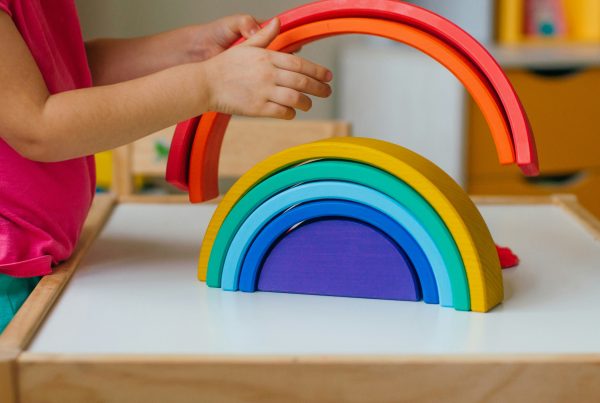
Why They’re Popular: In a time of branded, single-purpose playsets, these simple toys have no narrative. There’s no app to instruct or guide, no talking animals or lights to distract from the building process. Instead, you build what you imagine and learn, as you do, basic physics and spatial reasoning. Simple wooden blocks are quiet and heavy, feel and smell of real wood, and satisfy in a way plastic cannot. Modern iterations often use sustainably harvested wood and non-toxic stains, increasing their appeal.
2. The Sensory Calming Greats: Before It Had a Name
The Toys: Slinkies, Jacob’s Ladders, Klixx, and even the simple spinning top.
Why We Love Them: Kids today may call it “stimming” when they pull out a Slinky or pop the prism-topped toy into their mouth, but most of us knew its calming and focusing magic well before it had a label. When you set a Slinky loose on stairs, you’re taught about gravity, acceleration, and momentum. Watching a Jacob’s Ladder’s segments flip endlessly is hypnotic. They’re battery-free, contained, and simple to manipulate, and they prove math principles can be endlessly absorbing.
3. The Hands-on Sensory Exploration Masters: Play-Doh, Spirograph, & Lite-Brite
The Toys: The quintessential yellow can of squishy dough, the geometric drawing masterpiece, and the lighted pegboard.
Why They’re Thriving: These toys are the kings of hands-on, process-art type creation. Play-Doh’s squishiness is a non-stop source of stress-relief, expression, and experimentation. A modern Spirograph (many have re-designed the gears so they’re less fiddly to smaller hands) teaches you complex mathematical patterns through the creation of stunning art. A Lite-Brite offers a magical, low-light activity that feels special and artistic. Plus, every one provides a tactile, immediately “prizeable” result (“I made that!”)
4. The Physical Activity Icons: Skip-Its, Scooters, & Simple Balls
The Toys: The waist- or ankle-hopping skip rope toy, the sturdy-framed scooter (many of the newer ones use a “lean-to-steer” technology that’s much safer), and the regular 4-square or kickball.
Why They Endure: These toys require full-body movement, balance, and coordination. They’re built for two or more, encouraging neighborhood competitions, group games, and turn-taking. They hearken back to days of unstructured outdoor play, and many parents are eager to reintroduce that. Their appeal is simple: no charging, no syncing, and just pure, breathless fun.
5. The Cooperative and Strategy Board and Card Games
The Toys: Classic games like Guess Who?, Operation, Connect Four, and card games like Uno or Old Maid.
Why They Work: These games are easy to learn but can take hours to master. They create a special, enforced screen-free zone in the family home and teach kids about sportsmanship, strategy, and dealing with (or causing) others’ laughter over a buzzer’s “buzz.” In a world of solitary, head-down screen time, they force us to look across the table, read an opponent’s face, and create a shared memory.
The “Why” Behind the Retro Toy Resurgence: More Than Nostalgia
1. The Overstimulation Antidote: Many of these toys work at a human pace. They’re tactile and physical, not hyper-visual and frantic. Instead of overstimulating the nervous system, they calm and center it, providing a much-needed respite from the digital world.
2. Analog Problem-Solving: A top that won’t spin right, a block tower that keeps tumbling—physical problems like these require a physical solution. There is no button to press, no mouse to click, just the hands, the brain, and the trial-and-error lessons of real life. These boost resilience, spatial awareness, and flexible thinking.
3. Durability & Sustainability: Retro toys were made to last, and their reissues are no different. Wooden blocks, anyone? A set of blocks or Lincoln Logs can easily be passed down from child to child, generation to generation. They are a long-lasting alternative to the planned obsolescence of electronic toys, fitting better with current values of conscious consumerism.
4. Imagination Blank Canvas: A generic dollhouse or a plain set of wooden figures, knights or animals, doesn’t dictate a narrative. They ask the child to invent the characters, the plot, and the outcome. This encourages narrative thinking, empathy, and creative confidence, all skills as necessary today as ever.
5. Bridging the Generational Divide: When a parent sits down to play Spirograph with a child, or help build a Lincoln Log cabin, they’re not just sharing a toy, they’re sharing a piece of their own childhood, and creating a moment of true connection in the process. The universal language of play knows no age limit.
Building Your Own Retro Toy Collection
Look for:
Updated Safety Standards: Non-toxic (lead-free) paints and securely attached, safe-sized parts are musts.
Quality and Craftsmanship: Choose toys made of solid wood, rather than particle board; durable plastics, not brittle or floppy ones.
Emulate, Don’t Mimic: Don’t feel the need to track down an original from the 1970s. Aim for modern reissues that capture the play principles of that era: open-ended, high-quality, and creativity-encouraging.
The bottom line? Retro toys are enjoying a resurgence for important reasons beyond just nostalgia. These classic toys aren’t about a return to the “good old days”; they’re about bringing the best of that era into the future. They remind us that, in our plugged-in, battery-operated world, there’s still a critical, essential place for the unplugged, hands-on, human-paced play. They aren’t just cool again, they’re a necessary counterbalance to the pace of today’s high-tech toy world. It’s no accident that the best of these classic toys are both the ones from your childhood AND also those brands new to today’s children. They’re not just cool again, they’re needed again, and they’re here to stay.