In our early learning center aisles, the choices can be dizzying. 4-piece peg boards? 1000-piece country scenes? So much shelving, so many pieces, so little time!
The golden rule of puzzles is that they should be a little challenging: not so easy you lose interest, not so difficult you give up in frustration. So how do you find the sweet spot? This helpful guide is here to align that age-old play staple with the next phase of your little one’s development. Together, we’ll turn this classic into a brilliant boost for their cognitive, motor and emotional skills. Let’s dive into the 5 stages of the perfect puzzle.
Stage 1: The Sensory Explorer (9-18 months)
What They’re Learning: Early shape discrimination, hand-eye coordination, and an understanding of the concept of “object permanence” (the piece still exists even when it is taken out of the puzzle frame).
The Perfect Puzzle Type:
Chunky Wooden Peg Puzzles: Oversized, easy-to-grasp pieces with the image of the item underneath. You’ll want to start with just 3-4 pieces of a familiar object (animal, vehicle, toy) with a high-contrast image.
Shape Sorters: Technically not a jigsaw puzzle but an essential first-step pre-puzzle for children this age. Your young one will develop matching and orientation skills.
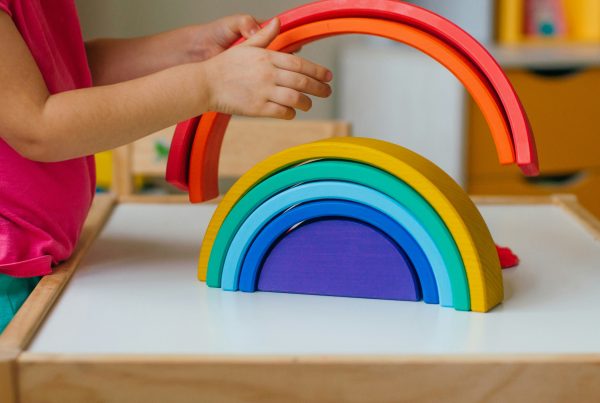
Nesting/Stacking Cups: Another early 3D puzzle, similar to a shape sorter. Cup stacking and nesting puzzles are great for developing relative size discrimination and sequencing.
Pro Tip: At this stage, the puzzle board itself is just as important as the puzzle pieces. They will need a defined frame (guidelines for where each piece goes) and a solid, clear “goal” (full object revealed).
Stage 2: The Pattern Recognizer (2-3 years)
What They’re Learning: Visual discrimination (attention to small details), language and vocabulary building, early problem-solving strategies and methods (trial and error, turning a piece over, changing seats).
The Perfect Puzzle Type:
Cardboard Frame Puzzles: Large, easy-to-grip pieces (3-12 total) that interlock with one another and fit into a single-layer sturdy frame. The full image is printed on the board for reference.
Themed Chunky Puzzles: Move away from a single item and progress to a scene (farm, construction site) with 5-8 large 3D pieces.
Simple Knobless Puzzles: No pegs? No problem! An easy transition to teach your little one to manipulate the pieces with a pincer grasp.
Pro Tip: Choose subjects and themes they love (dinosaurs, princesses, trucks, etc.) to motivate and engage. Sit with them and narrate the experience with a rich language: “That piece has a corner of the red barn. Let’s find the yellow beak of the chicken.”
Stage 3: The Confident Problem-Solver (3-5 years)
What They’re Learning: Planning and strategies (look for the edges to start! Sort by color first! ), delayed gratification, frustration tolerance, perseverance, success, positive self-esteem, and emerging fine motor skills.
The Perfect Puzzle Type:
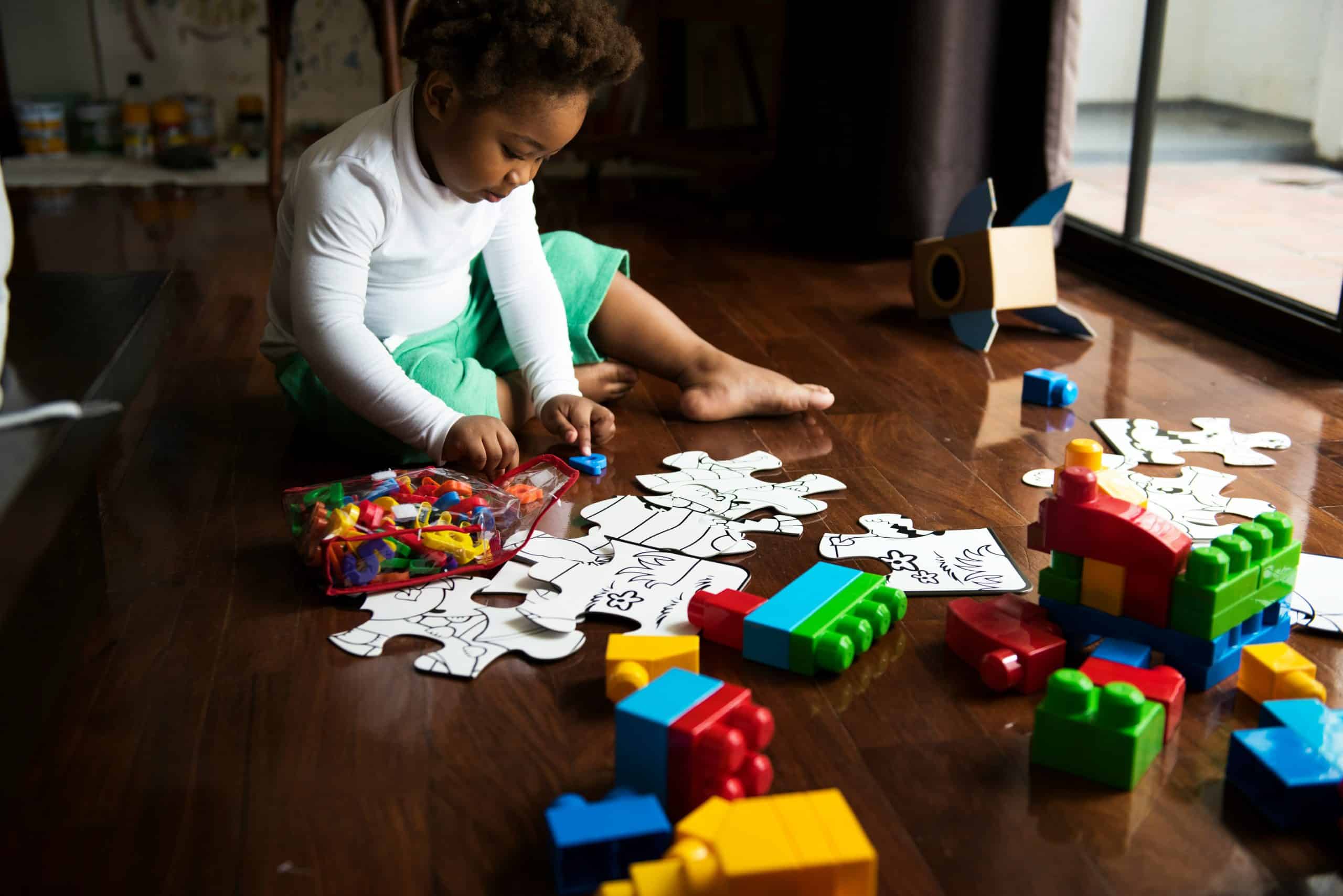
Multi-Layer & Floor Puzzles: Puzzles that have two or more layers (you can always remove the inner puzzle if it’s too hard and go back to it later). Floor puzzles (large, easy to manipulate pieces) are also fantastic for children this age for group play and gross motor movement.
Puzzles with Unique Cutouts: Pieces with a hole cut into them in the shape of the object in the puzzle (a firetruck piece cut out from within a fire station image).
Beginner Interlocking Jigsaws: Small, standard-sized jigsaw puzzles with 12-60 pieces and no frame. Think of these as the true “gateway puzzles” to classic puzzle-solving strategies.
Pro Tip: Introduce the idea of “edge pieces” or “frame pieces.” Sit together and complete the border first, which will give them a “manageable” size and feel. Praise the process: “You’re really studying the shapes!”
Stage 4: The Strategic Thinker (5-8 years)
What They’re Learning: Fine-tuned planning and follow-through, attention to detail, the ability to work on a project over multiple days.
The Perfect Puzzle Type:
Standard Jigsaw Puzzles (100-300 pieces): Look for puzzles with high-quality, thick cardboard that can’t bend. Images that are vivid and have clear zones of color and brightness will also help.
3D Puzzles & Globe Puzzles: Move into the world of spatial logic and see what it takes for your little one to grasp the idea of a 2D map and a sphere.
Puzzle Games: If they play it once and it’s over, is it really a game? Think Rush Hour or Solitaire-style logic puzzles that blend actual puzzle pieces and physical movement with the rules of games.
Pro Tip: Give them a dedicated puzzle space (a mat, a table) that they can work on and walk away from (but eventually come back to). This is a first step in project management and delay of gratification.
Stage 5: The Master Perseverer (8+)
What They’re Learning: Gaining stamina, the ability to focus deeply, and advanced use of sorting strategies by piece shape, color gradient, etc.
The Perfect Puzzle Type:
Complex Jigsaws (500+ pieces): Highly intricate scenes, gradients, and even monochromatic puzzles are challenging and require a unique set of skills.
Mechanical & Wooden Brainteasers: 3D disentanglement puzzles and take-apart/rebuild models with increasingly intricate mechanisms.
Collaborative Giant Puzzles: The family project of 1000-piece that is assembled in the living room and becomes the floor lamp shade for days to come.
Pro Tip: Offer the opportunity to make this a social or solo-sanctuary. Good lighting, a puzzle tray for sorting, and the freedom to do it “their way” are all key pieces here as well.
Beyond Age: The 5-Factor Puzzle Checklist for Any Age
Interest Level: It’s as simple as this: Does your child like the subject? Animals? Space? Fantasy? Learning tip: Engagement matters more than any developmental milestone or average piece count.
Piece Quality & Safety: Thick, durable pieces that fit well together. If you have a young child, make sure the pieces are not small enough to choke on.
The “Goldilocks” Challenge: A good rule of thumb is that a child should be able to complete about 80% on their own and require assistance with 20% of the puzzle. If they complete it with 100% accuracy and ease the first time, it’s time to level up.
Image Clarity: Clear, bold images with well-defined elements are far easier than a Seurat painting or an entire skyscape.
The Joy Factor: Does the finished product bring a smile to your face? Is it a joy to look at? The reward counts.
Development Matters: The Hidden Gifts of the Puzzle
The gifts go way beyond fine motor skills and low-key sensory play. With the right puzzle, you can teach grit (“I can’t do it… yet”), visual-spatial skills (vital for STEM), and impulse/self-regulation (“wow, I feel frustrated right now, but I can calm down and try again”).
What’s more, the screen-free sanctuary of concentration is pure gold. Take a deep breath, check their current level, and choose a puzzle that says: “I know you can do this.” Then watch with pride as they do, one perfect piece at a time.