Key Takeaways
- The “into everything” phase that toddlers (12-36 months) go through is actually a sign of healthy brain development and curiosity – not being naughty – and the right educational toys can help channel that energy into safe learning experiences.\
- Choosing the right educational toys can be a lifesaver for parents of curious toddlers, helping children develop essential skills and making playtime a breeze.\
- Certain types of toys like busy boards, posting boxes, stacking sets, and climbing structures are tailor made to meet your toddler’s urges to press, climb, dump and explore.\
- As they grow and develop, toys like wooden blocks and loose parts become – and stay – valuable assets to your child’s playroom.\
- When shopping for toys, look for ones that are built to last, have secure parts and are specifically designed with safety in mind for kids who still love to mouth and bang things.\
- Setting up a “yes space” at home where everything is safe to touch is a fantastic way to reduce those constant “no” battles and encourage your child to explore independently.\
- Educational toy collections are always being updated, so you can keep learning fresh and engaging for your child.
If your toddler is anything like mine, they’re at that “into everything” stage where they can pull off the shelves, open cupboards, press the dishwasher buttons and attempt to climb the coffee table in one morning before you’ve even had your first cup of coffee. I know, I know, it sounds chaotic. But here’s the thing most parent guides won’t tell you: this isn’t a behaviour problem. It’s actually brain activity at it’s finest. Between 12-36 months your toddler’s brain is literally unstoppable, driven by a desire to explore, test and understand the world around them through touch, movement and repetition.
Learning through play is what educational toys are all about. And by choosing the right ones you can turn that chaos into something really valuable – learning experiences for your child.
When we talk about educational toys, we’re talking about the ones that tap into what little learners are already desperate to do – climb, mouth, bang, tip out and explore. We’re not talking about gimmicky products that will be forgotten in a week. We’re talking about tools that actually work with your child, not against them.
This guide is for parents looking for practical advice on choosing educational toys that really support healthy development. We’ll focus on finding toys that are practical for your home, fit in small spaces and are budget-friendly. By the end, you’ll have some really useful examples and some great strategies for making the most of this fascinating phase.
How curious toddlers learn: why being “into everything” is their superpower
Between 0-3 years, your child’s brain is busy building neural connections at a rate that’s never going to be matched again. That constant curiosity that drives them to open every drawer? That’s them building their brain architecture.
Toddlers who are “into everything” learn through three key mechanisms:
- Repetition – they learn by doing the same thing over and over again (50 times with that spoon for example). This strengthens neural pathways.\
- Cause and effect – what happens if I press this? Push that? Drop this from here? These experiments help build their logical thinking.\
- Sensory feedback – touching, tasting, listening and watching teaches them how the world actually works.
Developmental stages shape what your toddler is drawn to explore at different times. Between 12-18 months they love pulling up, standing and testing height; between 18-24 months it’s all about climbing and tool-like play; and by 24-36 months they’re into early problem solving and pretend play.
Matching what your child wants to do with what they can do in a safe way is the key to educational toys. Rather than saying “no” to every cupboard they want to open, you can give them a busy board with doors, latches and switches that do the same thing. Stacking cups become physics lessons on gravity. Simple ramps teach cause and effect when cars roll down them.
Core educational toys for toddlers who touch, climb and explore
This section is all about the “workhorse” toys that curious toddlers will reach for every day. These aren’t novelty items, they’re the tools that every little learner needs to develop essential skills. Many of these educational toys are available now, so you can shop our collection today.Montessori toys are all about getting kids hands on so they can learn to be independent. Typically made from natural materials these toys have a special way of helping kids use those materials to develop their fine motor skills and problem solve through play.
These Educational Toys Are The Real Deal
Educational toys promote learning through play. Choosing the right educational toys can turn daily chaos into meaningful learning experiences. Educational toys help children develop essential skills for school and life.
They really do help kids develop the skills they need to do well in school and even more so in life. I’m talking building blocks, puzzles, the works – even musical instruments. And then there’s STEM kits and nature kits which are basically just loads of fun hands-on experiments that teach kids about science without them even realizing it.
Busy Boards – AKA The Answer to a Toddler’s Prayers
Your toddler is obsessed with fiddling with light switches and door handles? A busy board is just what they need. They’ve got switches that flip, zippers that pull, latches that unlock and the lot. These kind of boards really help kids develop fine motor skills, hand strength, problem solving and persistence – basically all the things you want them to learn at this age.
A good busy board will keep a toddler in line for about 15-20 minutes – a godsend for frazzled parents
Hand-Eye Coordination Toys – Because Toddlers Love Putting Things In Things
Toddlers have this thing where they love to put things inside other things. And it’s great. You can get wooden posting boxes, shape sorters with big pieces that they can easily pick up, coin box toys with big wooden discs… the list goes on.
These toys really do help with hand-eye coordination, colour recognition and maths concepts. Plus the repetitive action of posting helps build focus and concentration – essential for future learning.
Stacking and Nesting Sets – You’ve Got To Get Yourself One
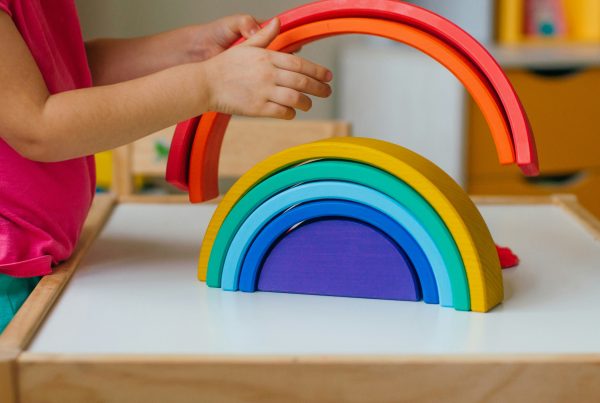
Stacking cups, nesting boxes and ring stackers are great for so many things – building towers (and watching them come crashing down), filling and emptying with water or rice, sorting by size. And because they’re so simple kids can get loads out of them over months and months.
They help with spatial awareness, word skills and cause-and-effect – all really important stuff.
Builders for Small Hands – Get Them The Right Tools
From around 18 months onwards kids are ready to start building with big blocks, magnetic tiles, and large connecting bricks. Just make sure the bits are big enough for their little hands to hold on to.
Building and knocking down is loads of fun for kids, and it also helps them develop problem solving, engineering skills and perseverance – and that’s invaluable. And when it all comes tumbling down they’ll just pick themselves up dust themselves off and try again.
Climbing and Movement Toys: Crawling and Climbing Toys
For kids who climb everything, toddler-safe climbing triangles, soft foam blocks, and low balance beams provide appropriate outlets. These are a great way to answer the urge to scale furniture while building core muscle strength, balance, and body awareness.
Rather than constantly removing your child from the back of the couch, a small indoor climber gives them a safe place to develop these crucial gross motor skills.
Sensory-Rich Toys For Kids Who Love To Squish, Pour, And Make Noise
Many “into everything” toddlers are also sensory seekers. They crave squishing, shaking, rattling, and pouring experiences that engage multiple senses at once.
Tactile Play: Soft, Moldable Materials
Toddler-safe play dough (supervised from around 18 months), squishy foam beads, and large nontoxic water beads in sealed containers provide satisfying tactile feedback. These materials support fine motor development and creative exploration.
Avoid loose small pieces for children under 3 years who still mouth everything. Sealed sensory bottles with water beads offer the visual fascination without the choking risk.
Water Play Setups
A plastic storage tub on the floor, bath toys with wheels and cups, and simple DIY funnels made from clean bottles create engaging water play. These teach early science concepts: full/empty, float/sink, and pouring control.
Water play often has a calming effect on highly active toddlers, making it useful for winding down after high-energy play.
Music and Sound Play: Sound and Music Toys
Real-sounding but toddler-safe instruments like shakers, small drums, xylophones, and rain sticks support rhythm awareness, listening skills, and coordinated movement. Look for instruments with solid construction that can withstand enthusiastic banging.
Music play naturally incorporates counting (“one, two, three, shake!”) and games that blend fun with learning.
Visual Sensory Toys
Liquid motion timers, prism blocks, and light-and-color blocks that can be held up to a sunny window spark scientific curiosity about how things work. These tend to encourage calm, focused observation—a nice balance to active physical play.
Safety note: Always supervise wet or messy play, especially with children who still mouth objects. Avoid any toys with small loose parts that present choking hazards.
Open-Ended Play: Toys That Grow With Your Child (And Survive The “Into Everything” Phase)
Open-ended toys can be used in many ways across several ages, instead of having one fixed “right” use. They represent the best long-term value for families.
Blocks and Building Sets
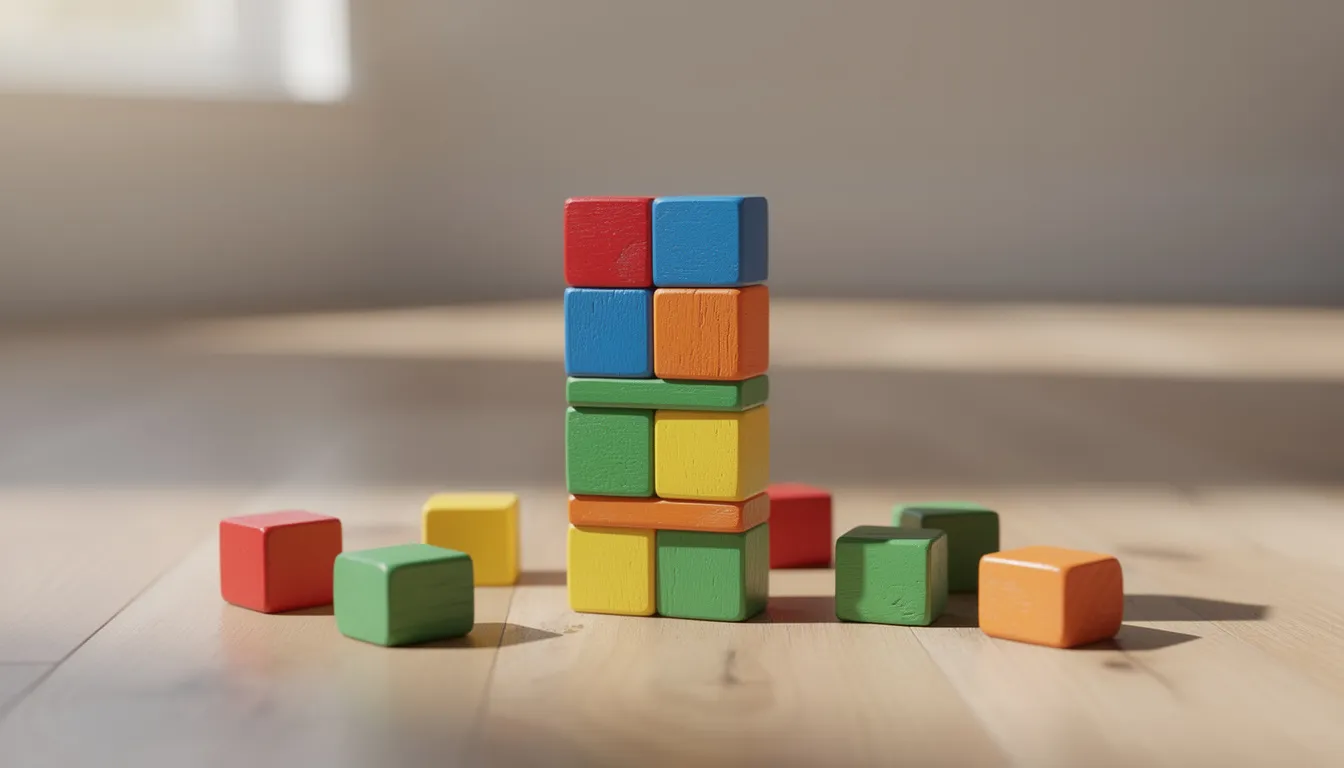
The same set of solid wooden toys or magnetic tiles serves completely different purposes as children grow:
| Age Range | How They Use Blocks |
|---|---|
| 12-18 months | Banging together, knocking down towers built by adults |
| 18-30 months | Building simple towers, bridges, and animal pens |
| 3+ years | Creating imaginative cities, elaborate structures |
This versatility means one quality set can provide years of play.
Loose Parts
Simple, durable objects become whatever a child imagines them to be. Large wooden rings, chunky pebbles, scarves, and metal bowls can be filled, poured, banged like drums, and later used for pretend cooking.
Loose parts encourage creative thinking because there’s no “correct” way to use them. Teachers often incorporate similar materials in classroom settings for exactly this reason.
Simple Dolls and Figures
Cloth dolls, wooden peg people, and animal figures without electronic features support early pretend play. Toddlers act out everyday routines—bath time, going to the park, feeding the baby—which develops empathy, language skills, and emotional understanding.
These simple figures help children process their feelings and practice social scenarios through play.
Ride-Ons and Push Toys
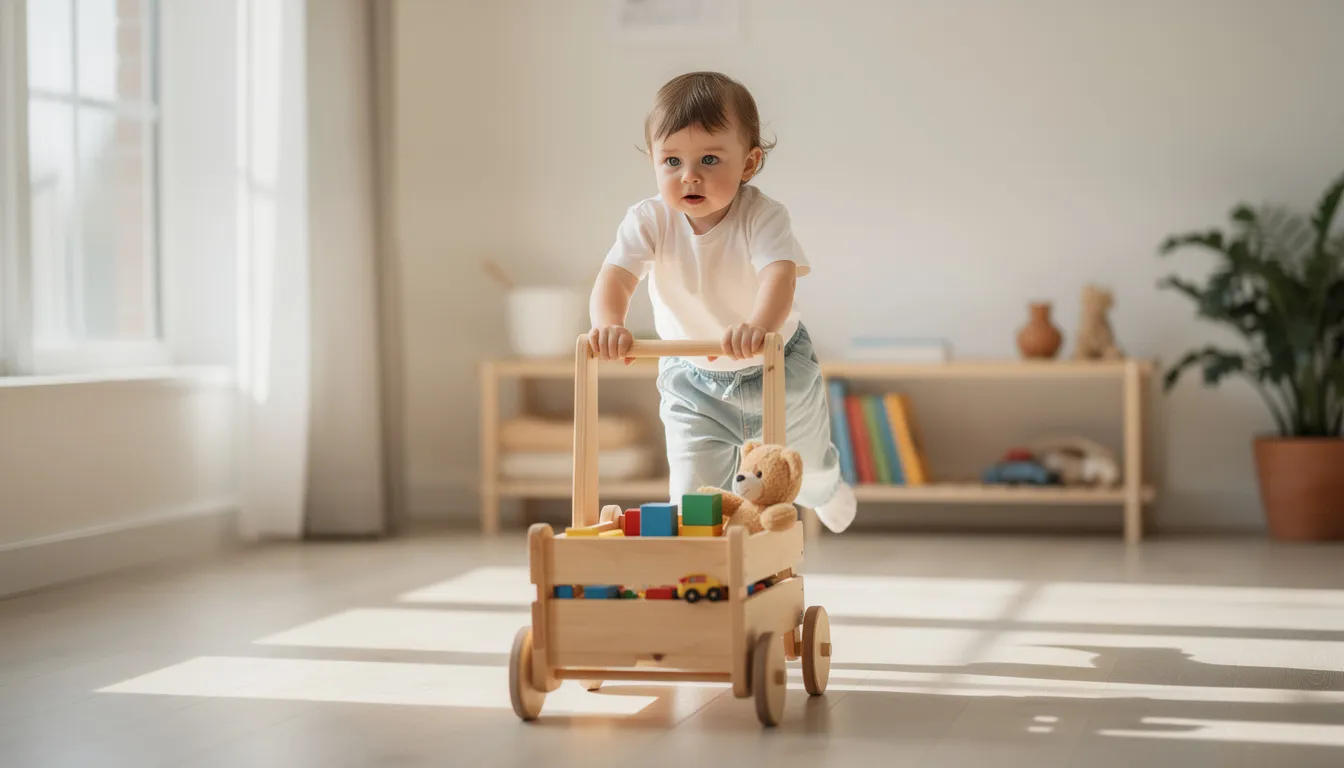
Sturdy ride-on cars, push carts, and doll buggies satisfy the urge to move and transport things. Toddlers love loading items into wagons and pushing them across the room.
These toys develop balance, coordination, and the physical confidence that supports all movement-based learning.
Value perspective: Open-ended toys survive from 18 months well into the preschool years. Investing in quality wooden blocks now means you won’t need to buy replacements. Compare this to single-purpose electronic toys that often get abandoned within weeks.
Choosing Educational Toys In 2025: Safety, Space, And Sanity
The 2025 toy market is overwhelming. Many educational toys are in stock and available for quick purchase, making it easier to find the right option without delay. Here’s how to filter it into sensible choices for children who bang, throw, and mouth everything.
Safety Checklist
Before you buy or add to cart, verify:
- Age ratings (pay special attention to “3+” warnings for children under 3)
- Secure, screw-closed battery compartments
- Non-toxic finishes and materials
- No small detachable parts for children under 3
- Appropriate safety markings for your region
Material Choices
Material Choices Table:
| Material | Pros | Cons |
|---|---|---|
| Solid wood | Durable, beautiful, often crafted to last generations | Heavier, can hurt if thrown |
| High-quality plastic | Lightweight, easy to clean, often more affordable | Environmental concerns, can crack |
| Silicone | Soft, safe for mouthing, easy to sanitize | Limited toy types available |
| Fabric | Soft, cuddly, machine washable | Can be harder to keep hygienic |
For “into everything” kids who drop, bang, and mouth toys constantly, favour durable, wipe-clean materials.
Space-Saving Ideas
Choose multi-use items where possible. A low shelf can double as a toddler climbing step. A play table with built-in storage reduces clutter. Limiting how many toys are out at once actually increases focused play.
Budget Strategies
Budget Strategies:
- Buy one high-quality open-ended toy per season (quarterly throughout 2025)
- Use second-hand options where safety can be verified
- Rotate toys every 1-2 weeks instead of constantly buying new products
- Recognize that ordinary household items (pots, wooden spoons, cardboard boxes) are powerful educational resources
Digital vs. Physical
Electronic learning toys and apps exist, and some customers find them helpful. Interactive laptops guide children through letter formation and phonics, helping them recognize and practice letters. Interactive literacy tools also support phonetic word building and vocabulary expansion. However, for children under 3, real-world hands-on play remains more powerful for core development than screens. Physical toys develop motor skills, sensory processing, and social interaction in ways screens simply cannot replicate.
If you do use digital resources, treat them as a small supplement rather than the main educational tool during this critical learning window.
Turning Your Home Into A Safe “Yes Space” For Explorers
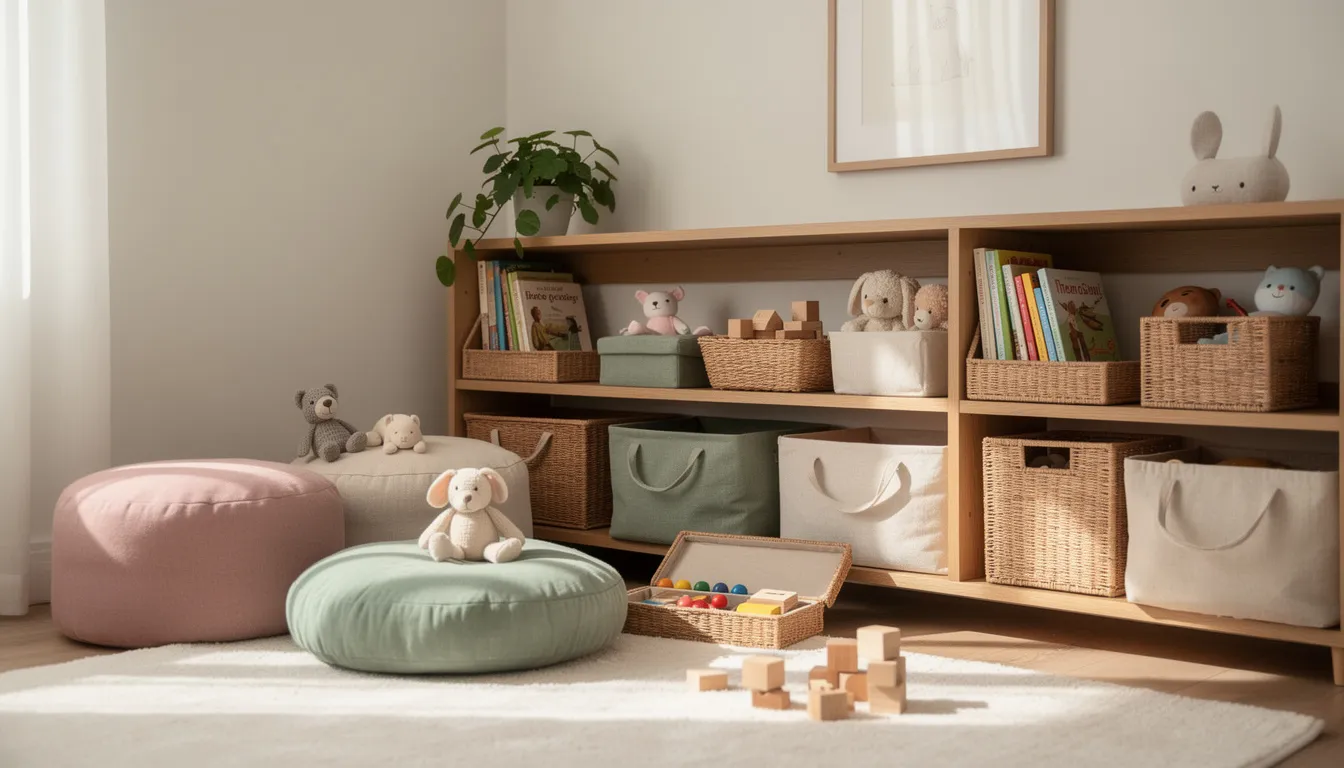
A “yes space” is an area where your toddler can move, touch, and experiment freely because everything within reach is safe. Instead of constant battles and “no” on repeat, they can explore independently while you actually drink that coffee.
Practical Room Setup
- Low, open shelving where toddlers can see and reach toys independently
- A soft rug for comfortable floor play
- A stable toddler table for sitting activities
- One or two small climbing or crawling elements (like a foam climber or low balance beam)
You don’t need an Instagram-ready playroom. A corner of your living room works perfectly.
Safety Adjustments
Make the space genuinely safe:
- Anchor all furniture that could tip
- Use cupboard locks for areas with unsafe items
- Cover electrical outlets
- Offer alternatives (like a busy board) so children still have satisfying things to open and press
The goal is redirecting curiosity, not suppressing it.
Organising Toys
Simple baskets or clear boxes with picture labels help toddlers see what’s available and make independent choices. Sort by category: blocks in one basket, cars in another, dolls and figures together.
When toddlers can find what they want, they engage more deeply instead of dumping everything to search.
Daily Rhythm Ideas
A realistic 2025 weekday might look like:
- Morning: A tray of blocks and cars set out as an “invitation to play”
- After lunch: Water play in the kitchen or sensory materials
- Afternoon: Books, puzzles, and quieter activities
- Before bed: Soft toys, gentle music, and winding-down time
Short, repeated play sessions work better than expecting long independent play from children this age. Roll with their natural energy patterns rather than fighting them.
FAQ: Educational Toys For Curious, “Into Everything” Toddlers
These questions cover common concerns from parents of very active, curious toddlers who are ready to explore the world through play.
For example, core educational toys include:
- Building blocks
- Shape sorters
- Stacking rings
Fun educational toys like frogs-themed games or puzzles can also help children develop problem-solving skills.
Are battery-powered toys bad for toddlers who are into everything?
Battery-powered toys aren’t inherently bad, but they require careful selection. Look for secure screw-closed battery compartments that strong little hands can’t pry open, sturdy casings, and no loose parts.
The key is choosing toys that respond meaningfully to what your child does—like simple remote-control cars or electronic instruments—rather than toys that just flash and make noise when a button is pressed. The former builds real cause-and-effect understanding; the latter often becomes background noise.
Balance any electronic toys with plenty of non-electronic options like blocks, puzzles, and pretend-play materials. Your child benefits from a range of play experiences.
How many educational toys does a toddler really need?
Fewer than you might expect. A core set of 8-12 well-chosen items typically provides everything a toddler needs:
- Building blocks
- One posting or sorting toy
- Stacking/nesting set
- Simple puzzles (2-4 pieces for beginners)
- Vehicles (cars, trains)
- Dolls or figures
- One musical toy
- One climbing or ride-on toy
Rotate toys every week or two—store some away and swap them back later. This maintains curiosity without constant new purchases. And remember: ordinary household items like pots, wooden spoons, laundry baskets, and cardboard boxes are powerful play materials that cost nothing.
What if my child only wants to play with “non-toys” like remotes and cables?
This is completely normal. Toddlers are wired to copy what they see adults using, so real-life objects hold special appeal.
Provide safe “real” alternatives:
- An old battery-free remote with tape securing the battery door
- A basket of clean keys
- A toy telephone with actual buttons
Some parents keep a “toddler drawer” in the kitchen with safe real items like wooden spoons, plastic containers, and whisks.
Keep truly unsafe objects completely out of reach rather than repeatedly saying “no.” Redirect to safe alternatives that offer similar sensory experiences—the satisfaction of pressing buttons, the weight of real objects.
Are screen-based learning apps useful for kids under 3 who are very curious?
Current research suggests that children under 3 learn best through hands-on, real-world play and interaction with adults, not from screens alone. The rapid brain development happening during these years requires physical manipulation, sensory input, and human connection.
Occasional short, shared screen time—like looking at animal pictures together and naming them—is generally fine. But screens shouldn’t replace physical play, movement, and face-to-face conversation.
If you do use screens, treat them as a small extra, not the main educational tool during the intense 1-3 year learning window.
How do I know if a toy is too advanced or too simple for my toddler?
Use this quick rule of thumb:
- Too advanced: Your child becomes frustrated and gives up immediately every time.
- Too simple: They ignore it completely or show zero interest.
- Just right: They can use it independently in at least one way, with obvious “next steps” to grow into.
Watch how your child actually uses a toy. A puzzle they currently bang and loosely match can become one they fit precisely as skills develop. You can remove some pieces to make toys easier, demonstrate one small step, or simply set something aside and try again a month later.
Children develop at different paces, and interest often matters more than age. Read your child’s cues and adjust accordingly.