
The Secret to a Tidier Home & a More Engaged Child
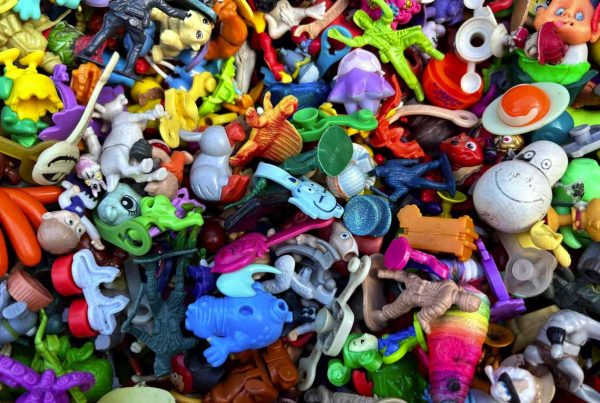
Does your playroom look like a tornado swept through a toy store, but your toddler still whines “there’s nothing to play with?” Are all those amazing toys you carefully (expensively) selected left untouched in favor of broken household items?
Welcome to the paradox of choice! Too many play options can overwhelm, even exhaust a child’s brain and creativity. And instead of digging into one of the many bins, your child stares blankly at the wall, a very loud and clear sign it’s time for a change. Not more stuff (you’ve got it all, right?) but a better system for what’s out in your playroom at any given time. Meet toy rotation: a simple and powerful tool to tame the toy chaos, encourage your child to play independently, and take the edge off old favorites. Ready to put the new back in old toy? Let’s get into it.
The “Why”: Why Toy Rotation Works
Reduces Overstimulation. Fewer choices means more focused and meaningful play instead of restless bouncing from activity to activity.
Sparks Creativity & Appreciation. Limited options mean a toy box will be put to use in unusual and creative ways and old favorites will be rediscovered.
Makes Clean-Up Doable. With only a handful of toys out at a time, your child can truly take ownership of the clean-up.
Makes Toy Storage “Make Sense”. You only need accessible toy storage for one rotation at a time. The rest can be safely tucked away in closets and under beds.
Reveals Your Child’s Real Favorites. You’ll see what really stands the test of time, what toys are truly loved. Everything else? Donations (bonus: space in the toy cupboard).
Step 1: The Great Toy Audit & Sort
Gather & Categorize. Gather ALL of your child’s toys from all over your house and put them in one big pile (yes, all of them). Sort them into broad categories (Building, Pretend Play, Vehicles, Games/Puzzles, Art/Sensory, Sensory/Sounds, Stuffed Animals, Musical Instruments).
Go with the Four-Box Method. As you sort through the pile, quickly decide which box each toy belongs in (trust your instincts! There is no math here! ).
Toy Rotation Stash. The “keep” pile. Good condition, age-appropriate, they loved it. This is your working toy inventory.
Donate Box. Outgrown toys, never-played-with toys, missing pieces toys. (If it’s broken beyond repair, throw it in the recycling.)
Sentimental/Keeper Box. This box is for special exceptions that don’t really belong in the Rotation Stash: special hand-me-downs, well-loved loveys. (Store this separate from the Rotation Stash.)
The “Maybe” Box. The box you seal, date and store. Leave it alone for 3 months. (If no one has asked to play with an item in there, donate the whole box, unopened.)
Step 2: Design Your Rotation System
Choose Your “Out” Toys. Select the toys for your child’s main play space. A good rule of thumb for a toddler/kid-friendly collection is 8-10 “play prompts” total. For example:
- 1-2 Building sets (blocks, magnetic tiles, etc)
- 1-2 Pretend play sets (kitchen food, doctor’s kit, etc)
- 1-2 Vehicle/Figure sets
- 1 Puzzle or Game
- 1 Art/Sensory activity
- 1-2 Wild Cards (child’s favorite doll, a musical instrument)
Create Your “In” Storage. Put the rest of your Rotation Stash safely out of sight and out of mind. Clearly label bins for each category and put them on closet shelves, under beds, or any other space that is not accessible (or too tempting) for your child. You can also group by subcategory: all the building toys in one bin, all the pretend food in another, etc.
Step 3: Establish a Rotation Rhythm
Decide on a schedule that works for you. Consistency is important (you don’t want to mess up an emerging interest!) but the details are up to you.
The Weekly Swap. Simple and effective. Every weekend, swap out 3-4 items.
The “When Boredom Strikes” Swap. Less rigid, more intuitive. Swap out a few toys whenever you sense engagement waning.
The Thematic Rotation. Rotations with a theme: a rocket ship and astronaut figures and a space-themed puzzle one month, a farm theme the next.
The “New & Old” Rule. Every time a new toy enters the playroom, a toy of similar type/interest level is rotated out. Helps keep balance.
Pro Tips: Some Tricks of the Toy Rotation Trade
Involve Your Child (Wisely). For kids age 2+, let them decide 1-2 toys to “retire” to the back, 1-2 toys to “welcome back.” Gives them agency and helps keep their interest in the system.
Clean & Refresh. Before storing, wipe down the toys and put all the pieces in a ziplock bag so you can be sure it’s complete. Toys feel fresh and cared for when they enter their next rotation.
Create “Toy Discovery” Moments. Don’t just stack rotated toys on a shelf. Present it attractively: build a simple structure with the blocks, line up the cars, dress the doll. Sparks immediate engagement.
Resist the Urge to Over-Swap. If they’re happily and fully engaged with a set, leave it be! Rotation isn’t for the sake of rigid schedules, it’s to sustain good play.
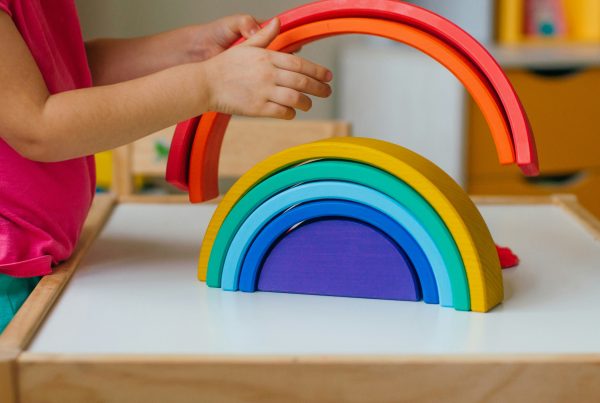
Keep “Open-Ended” as Your Guiding Principle. Give preference when swapping in toys with high play value: building blocks, dress-up clothes, play silks, animal figurines, basic art materials. Toys that can be played with in unlimited ways generate the most creativity and engagement.
Troubleshooting Common Obstacles
“But they only play with one thing!” That’s fine! Immersion and deep, sustained play are a good thing. Rotate the other toys around that one true love.
“They ask for a toy that’s in the cupboard.” Celebrate that you have an actual reason to swap toys! It means they remember and they missed a toy. You can either use it as a learning moment: “We’ll bring that back next week!” (building delayed gratification skills) or you can do a quick swap if it works with the timing.
“I don’t have enough storage space.” No problem! Start with just one bin, say, the stuffed animals. Rotate just the stuffed animals. Even a single-category rotation has enormous benefits.
“It feels like more work”. Acknowledged! The upfront work is the investment, and the daily maintenance (give or take 10 minutes a week) saves you time dealing with both a messy space and a “bored” child.
The Bigger Picture: Less Stuff, More Childhood
Toy rotation is the ultimate decluttering tool for a reason. It’s not about denying your child a lot of toys. It’s about curating the environment to suit your child’s (and your family’s) needs. Toy rotation helps you both be in control of the stimuli coming at them, which gives your child space to concentrate, daydream and just be. A space where the mind can wander freely to generate creative play and stories. It gives you peace of mind and allows you to enjoy their play (instead of doing all the play yourself). So take a deep breath, start with just one bin and let your child fall in love with their toys all over again.